


If you are learning how to host a webinar, it’s easy to assume the hardest part is creating slides or speaking live in front of an audience.
Usually, it’s not.
Most webinars fail quietly. People register, attendance drops, engagement disappears, and the presentation ends without creating real client momentum.
That can feel discouraging, especially for coaches, consultants, experts, and solopreneurs who already know their expertise creates results.
The good news is that profitable webinars aren’t built on charisma, complicated funnels, or high-pressure sales tactics.
They are built on structure.
A strong webinar strategy helps you:
- attract the right audience
- increase webinar attendance
- keep people engaged
- position your services naturally
- convert attendees into paying clients
Once the system is working, webinars stop feeling like another marketing task and start becoming a scalable way to grow your business without adding more 1:1 hours to your week.
Instead of repeating yourself on endless calls or trying to explain your process one person at a time, you can teach once, build trust at scale, and guide people toward the next step.
In this guide, you will learn how to host a webinar that feels clear, practical, engaging, and conversion-focused without sounding overly polished or pushy.
Build Your Webinar System Before You Go Live
Most webinars don’t fail because of bad content. They fail because there is no system behind the registration, attendance, follow-up, and conversion process.
The WebinarJam Kit gives you:
So instead of rebuilding your webinar process every time, you can run a proven system that already supports attendance, engagement, and follow-up.
What Makes a Webinar Actually Convert?
A webinar is not just a presentation. It’s a trust-building experience.
That distinction matters because many webinar hosts approach webinars like classroom lectures or in-person workshops. They try to teach everything they know in a single session.
The result is usually the same:
- too much information
- overwhelmed attendees
- weak engagement
- low conversion
The best webinars do something different. They help people believe:
- their problem can be solved
- your framework makes sense
- the next step feels achievable
That is why webinars continue to work so well for coaches, consultants, and service providers.
Unlike static content, a live webinar allows people to experience your thinking in real time. They hear how you explain problems. They watch how you guide decisions. They see how you interact during Q&A.
When people can hear your thinking, watch your process, and interact with you live, trust develops much faster than it does through static content alone.
And trust is what drives conversions and long-term brand awareness.
The 4 Parts of a Profitable Webinar System
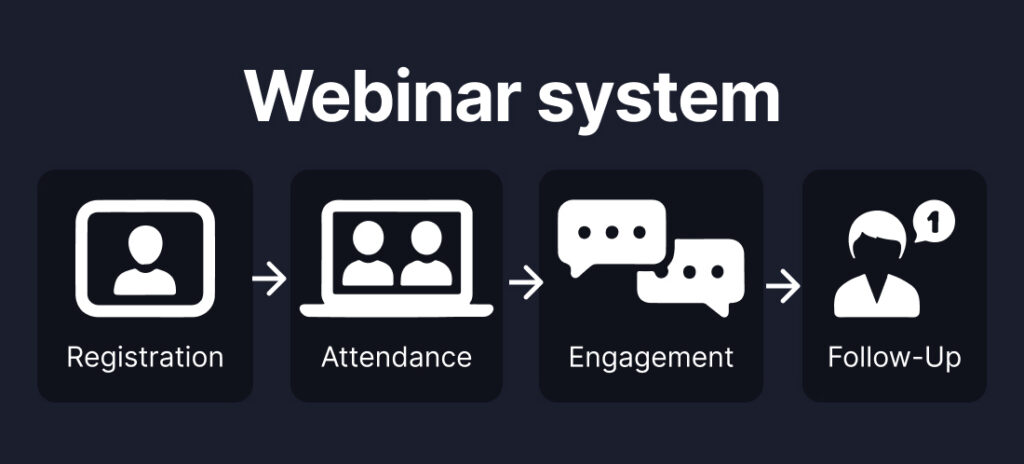
Most profitable webinars follow the same four-part system:
- Registration
- Attendance
- Engagement
- Follow-up
Each part affects the next.
A webinar with strong attendance but weak follow-up still loses sales opportunities.
A webinar with high engagement but poor registration copy struggles to fill seats in the first place.
The goal is not just hosting a live event. The goal is building a webinar system where each stage supports conversion.
For example:
- a weak registration page lowers signups
- poor email reminders reduce attendance rates
- low engagement causes attendees to leave early
- weak post-webinar follow-up leaves revenue on the table
The highest-converting webinars are rarely the most polished. They are the ones backed by a repeatable system before, during, and after the live event.
Once you understand that, hosting engaging webinars becomes much easier to improve consistently.
Step 1: Choose a Webinar Topic That Attracts the Right Audience
The success of your webinar often starts before anyone registers.
It starts with the topic.
Many webinar hosts choose topics that are:
- too broad
- too technical
- too disconnected from what their audience actually wants
A better approach is to focus on a specific problem your target audience already wants solved. For example:
- a business coach might teach how to create a referral system without relying on social media
- a consultant might explain how to improve client retention
- a wellness expert might teach a repeatable framework for reducing stress
The clearer the outcome, the easier webinar marketing becomes.
Start With the Problem, Not the Product
One of the biggest webinar mistakes is building the presentation around your service instead of your audience’s pain point.
People don’t register because they want another webinar. They register because they want a result.
Before choosing your webinar topic, ask:
- What problem keeps my audience stuck?
- What result are they trying to achieve?
- What obstacle is slowing them down?
- What misconception is costing them progress?
Your webinar content should sit directly in the middle of those answers.
Webinar Topic Formulas That Consistently Work
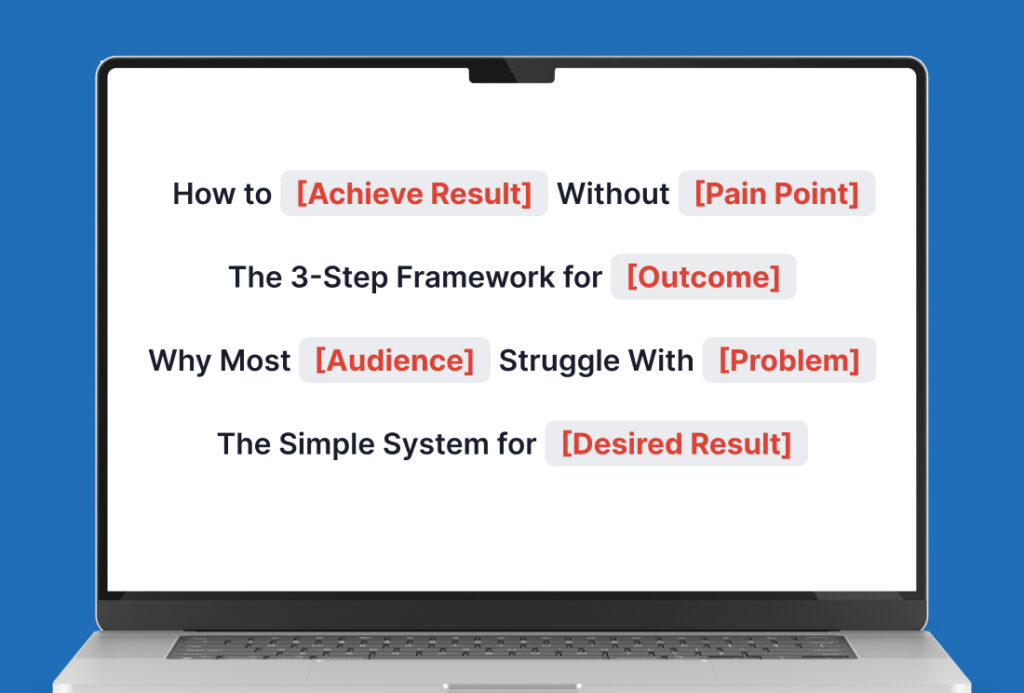
Simple webinar titles usually outperform clever ones. A few proven formats include:
- How to [Achieve Result] Without [Pain Point]
- The [Number]-Step Framework for [Outcome]
- Why Most [Audience] Struggle With [Problem]
- How to Avoid [Common Mistake]
- The Simple System for [Desired Result]
Here are a few examples:
- How to Improve Team Productivity Without Burning Out Your Staff
- The 5-Step Framework for Planning a Stress-Free Kitchen Remodel
- Why Most First-Time Investors Struggle With Long-Term Growth
- How to Avoid Common Nutrition Mistakes That Drain Your Energy
- The Simple System for Organizing Your Finances as a Freelancer
These webinar titles work because they are clear, outcome-driven, and easy to understand quickly.
Align the Webinar With Your Paid Offer
Your webinar should naturally connect to the next step.
That doesn’t mean turning the webinar presentation into a nonstop sales pitch. It means choosing a webinar topic that leads logically into your service, course, consulting offer, or membership.
For example:
- a webinar about onboarding systems could lead into consulting support
- a webinar about webinar funnels could lead into implementation coaching
- a webinar about nutrition planning could lead into a paid membership
If the webinar topic and your offer feel disconnected, conversion rates usually drop.
Step 2: Create a Registration Page That Increases Signups
Once you have a strong webinar topic, the next step is creating a registration page that encourages people to sign up.
Many webinar landing pages fail because they focus too heavily on design and not enough on clarity.
Your audience should immediately understand:
- what the webinar is about
- who it’s for
- what they will learn
- why it matters
- why they should attend live
If people feel confused, they leave.
What Every Webinar Registration Page Needs
At minimum, your registration page should include:
- a clear headline
- a concise explanation of the webinar
- the webinar date and start time
- speaker credibility
- a registration form
- a strong call-to-action button
You don’t need long blocks of copy.
You need clarity.
A strong webinar registration page answers questions quickly and reduces hesitation.
Why Most Webinar Landing Pages Underperform
A few common mistakes include:
- vague webinar titles
- too much text
- weak formatting
- focusing on credentials instead of outcomes
- unclear positioning
- complicated messaging
For example, this headline is weak:
“Join Our Upcoming Webinar About Healthy Eating”
This version is much stronger:
“How to Meal Prep for the Week Without Spending Hours in the Kitchen”
The second headline creates clarity and curiosity at the same time.
Focus on Clarity Over Cleverness
People make decisions quickly online.
That means your webinar marketing message needs to be direct. Avoid:
- abstract language
- overly creative headlines
- industry jargon
- complicated explanations
Instead, focus on practical outcomes and transformation.
A good webinar landing page should feel easy to understand at a glance.
It should also make it easy to invite attendees from different industries and experience levels without confusing them.
Need Help Writing Your Webinar Registration Page?
Strong webinar registration pages are usually simple, clear, and outcome-focused.
The WebinarJam Kit includes:
So you don’t have to start from a blank page every time you host a webinar.
Step 3: Increase Attendance With a Simple Show-Up System
Getting registrations is only part of the process. Now you need people to actually attend the webinar.
This is where many webinar strategies break down.
Low attendance usually has less to do with audience quality and more to do with weak follow-up systems.
People are busy. They forget. Emails get buried.
Without a structured reminder sequence, webinar attendees often disappear before the live event even starts.
Why Webinar Registrants Don’t Attend
There are a few common reasons:
- they forgot about the webinar
- they were unclear about the value
- they registered impulsively
- they never added the event to their calendar
- the reminder emails lacked relevance
- the webinar time conflicted with different time zones
This is why reminder systems matter so much.
The Reminder Sequence Every Webinar Needs
A simple webinar reminder sequence usually includes:
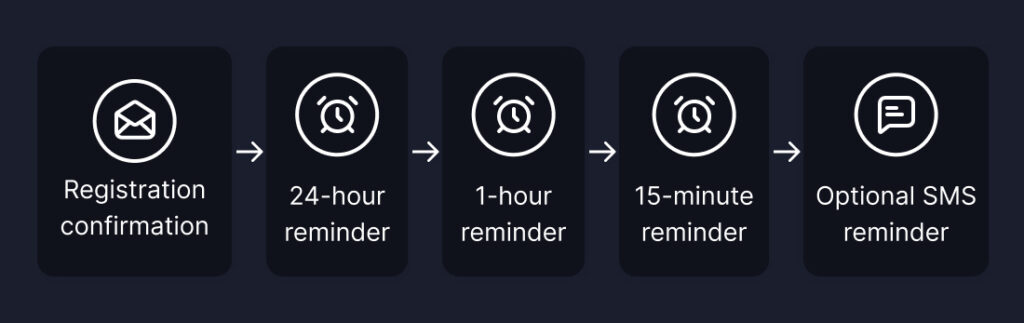
- confirmation email immediately after registration
- 24-hour reminder
- 1-hour reminder
- 15-minute reminder
- optional SMS reminder
Each message should reinforce:
- what attendees will learn
- why the webinar matters
- what makes attending live worthwhile
For example, a 24-hour reminder subject line could look like this:
“Tomorrow: How to Reduce Stress Without Completely Changing Your Routine”
Simple. Clear. Outcome-focused.
Small Changes That Improve Show-Up Rates
Small adjustments can dramatically improve webinar attendance.
A few examples:
- include calendar invite links
- preview key takeaways
- mention live Q&A sessions
- use polls and engagement tools
- remind attendees why live participation matters
Engagement starts before the webinar begins.
When attendees feel involved early, they are more likely to stay engaged during the webinar presentation itself.
Stop Watching Registered Attendees Disappear Before Your Webinar Starts
Even strong webinar topics struggle when reminder systems are weak.
The WebinarJam Kit includes the full Show-Up System, including:
So instead of guessing why attendees disappear before the webinar starts, you can follow a proven attendance system that keeps more registrants engaged and ready to show up live.
Step 4: Structure Your Webinar Presentation for Engagement and Conversion
Once attendees join the webinar, your goal is to maintain momentum. This is where structure matters.
A disorganized webinar presentation creates confusion. A structured webinar keeps people focused and moving forward.
The Ideal Webinar Structure
Most effective webinars follow a simple flow:
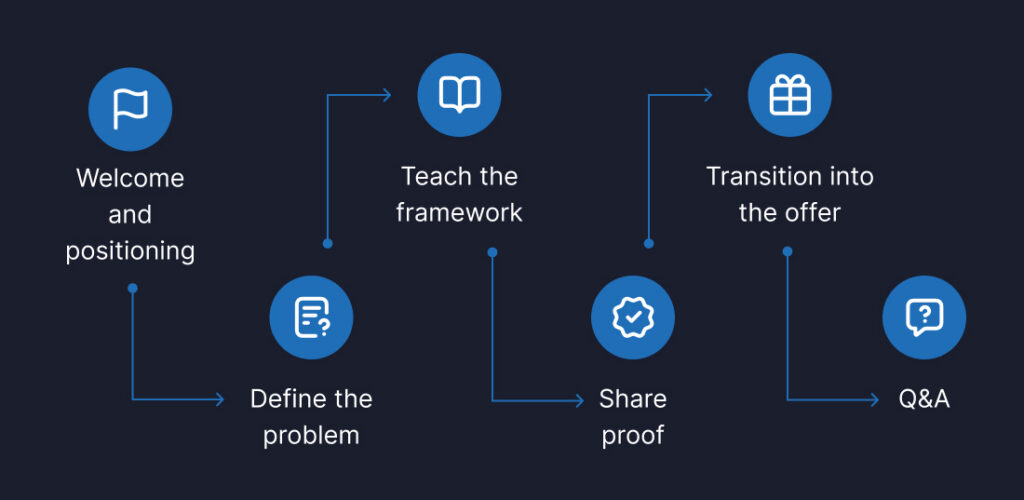
- Welcome and positioning
- Define the problem
- Teach a clear framework or process
- Share proof or examples
- Transition into the offer
- Q&A
This structure works because each section prepares attendees for the next step.
The webinar feels intentional instead of scattered.
Teach Enough to Build Trust Without Overwhelming People
One of the biggest webinar mistakes is teaching too much.
Many experts try to compress years of experience into one presentation. That usually backfires.
When webinar attendees feel overwhelmed, they delay decisions.
The goal is not to explain everything. The goal is to create clarity. Focus on:
- simplifying the process
- explaining key concepts clearly
- helping attendees see what is possible
- identifying the gap between information and implementation
Most webinar attendees aren’t looking for more information. They are looking for clarity, confidence, and a faster path to implementation.
They buy because they want support applying it successfully.
Engagement Strategies That Keep Webinar Attendees Watching
Attention drops quickly during online events.
That is why engagement matters throughout the webinar.
Simple engagement strategies include:
- asking attendees questions in chat
- using polls
- encouraging short responses
- telling stories
- answering live questions
- referencing attendee comments during the presentation
Some webinar hosts also bring in guest speakers, co-hosts, or panelists to create more interaction and variety during longer sessions.
These small interactions make the webinar feel more personal and dynamic.
They also help attendees stay mentally involved.
How to Transition Into Your Offer Naturally
Many webinar hosts become uncomfortable when it’s time to sell.
Usually, that happens because the transition feels abrupt.
A better approach is to connect the teaching directly to the next step.
For example, a consultant teaching lead generation strategies might spend 45 minutes simplifying the framework, then offer implementation support for businesses that want help applying it faster.
That feels natural because the offer solves the problem introduced during the webinar.
No pressure required.
Step 5: Make an Offer Without Sounding Pushy
Selling during a webinar doesn’t need to feel uncomfortable.
When the webinar is structured correctly, the offer often feels helpful and expected.
The key is positioning.
Why Most Webinar Offers Feel Awkward
Offers usually feel forced when:
- the webinar lacks structure
- the transition is abrupt
- the pitch focuses too heavily on features
- there is little emotional connection beforehand
Attendees need to understand why the next step matters.
Without that context, the offer feels disconnected from the presentation.
Position the Offer as the Next Logical Step
The webinar should create belief.
Your offer should create implementation.
That is an important distinction. For example:
- the webinar teaches the strategy
- the coaching program helps apply it
- the course provides step-by-step execution
- the consulting offer accelerates results
When framed correctly, the offer becomes a continuation of the webinar instead of a sudden sales pitch.
Build a Strong Offer Stack
A strong offer stack increases perceived value and reduces hesitation. Depending on your business, this could include:
- templates
- frameworks
- workshops
- coaching calls
- implementation tools
- bonus training
- community access
The goal is not to overwhelm attendees with extras.
The goal is to help them understand the support they are receiving.
Step 6: Follow Up With Webinar Attendees After the Event
Some webinar hosts assume the process is over once the presentation ends. That’s a costly mistake.
Many webinar conversions happen during post-webinar follow-up.
To make a decision, people often need:
- time to think
- time to review the webinar recording
- additional clarification
- reinforcement
- reassurance
That is why follow-up emails matter so much.
The Essential Webinar Follow-Up Sequence
A simple webinar follow-up sequence might include:
- replay email
- FAQ email
- case study email
- objection-handling email
- reminder email
Each message should continue the conversation started during the webinar. For example, a replay email opener could say:
“If you missed part of today’s webinar or want to revisit the framework, here is the replay.”
Clear and direct.
Offering an on-demand replay also helps attendees who couldn’t attend because of scheduling conflicts or time zones.
Segment Follow-Up Based on Behavior
Not all webinar attendees behave the same way.
Some stay until the end.
Some leave early.
Some watch the replay.
Some click links but never take action.
Segmentation allows your follow-up emails to feel more relevant and personalized. For example:
- replay viewers may need urgency
- attendees who left early may need additional context
- highly engaged attendees may be ready for direct next steps
These small adjustments often improve conversion rates significantly.
Live Webinar vs Automated Webinar: Which Should You Choose?
Both live webinars and automated webinars can work well.
The right choice depends on your stage of business and webinar strategy.
Benefits of Live Webinars
Live webinars help build connection quickly. They allow for:
- real-time engagement
- live Q&A
- audience feedback
- stronger trust-building
For newer webinar hosts, live webinars are usually the best starting point because they help refine messaging and presentation skills faster.
A live event also gives you the chance to answer questions directly and improve future webinars based on attendee feedback.
Benefits of Automated Webinars
Automated webinars create scalability.
Once your webinar presentation performs well, automation allows you to:
- run webinars consistently
- reduce scheduling pressure
- generate leads continuously
- create more predictable systems
Automated webinar software can also improve consistency because the experience becomes repeatable.
Many businesses eventually combine live webinars with on-demand webinar content for better long-term lead generation.
The Best Approach for Most Experts
For most coaches, consultants, and experts, the best approach is:
- start with live webinars
- refine the messaging
- automate the webinar later
This creates a stronger foundation before scaling traffic and lead generation.
The Best Webinar Software for Coaches, Consultants, and Experts
Your webinar software plays a major role in the attendee experience.
The best webinar platform is not necessarily the one with the most features. It’s the one that supports the entire webinar journey.
What to Look for in Webinar Software
A strong webinar platform should support:
- registration pages
- email reminders
- attendee engagement
- polls and Q&A
- replay tracking
- analytics
- automated webinar functionality
High-quality webinar software should also support:
- screen sharing
- live streaming
- webcam presentations
- moderator controls
- co-host and panelist permissions
- CRM integrations
- webinar recordings
These features help create a smoother experience for both webinar hosts and attendees.
Why Systems Matter More Than Features
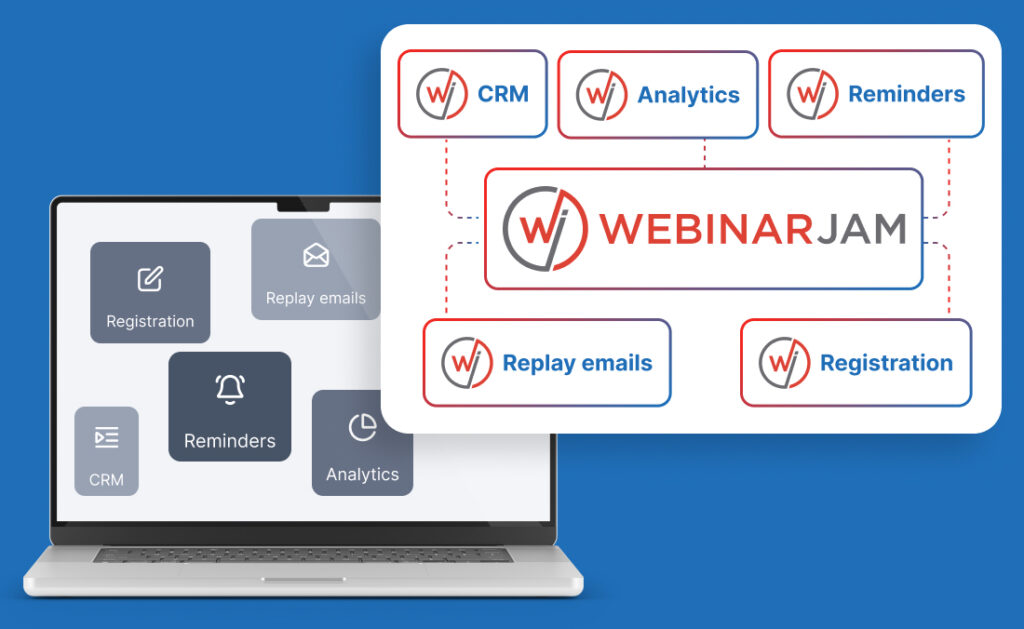
Many experts struggle because they are juggling disconnected tools.
One platform handles registration pages. Another handles reminders. Another manages replay emails.
That creates friction and unnecessary complexity.
The strongest webinar systems simplify the process and reduce operational overwhelm.
That matters because most coaches, consultants, and experts aren’t trying to become full-time marketers. They want a reliable way to:
- teach at scale
- build trust
- generate leads
- create consistent client conversations
Without spending all day managing technology.
An all-in-one webinar platform can simplify everything from registration to post-webinar follow-up.
It can also reduce technical issues that hurt the attendee experience during live streaming sessions.
Features That Improve the Webinar Experience
As your webinars become more advanced, certain engagement features become increasingly valuable. For example:
- breakout rooms can improve interaction during workshops
- moderators can manage chat and answer questions
- co-hosts can help manage audience flow
- panelists and guest speakers can create more dynamic discussions
- screen sharing makes tutorials easier to follow
These features help webinars feel more interactive and less one-sided.
Technical preparation matters just as much as presentation quality.
Before hosting a live webinar:
- test your internet connection
- confirm microphone and webcam quality
- review permissions for panelists and co-hosts
- know how to unmute attendees if needed
- test your webinar recording settings
These small details create a smoother attendee experience and reduce technical issues during the live event.
Final Thoughts
Learning how to host a webinar is not really about becoming a better presenter. It’s about building a system that consistently moves people from interest to action.
The most successful webinars are structured intentionally. They:
- attract the right audience
- increase attendance
- maintain engagement
- create trust
- guide attendees toward the next step
- continue the conversation through follow-up
When those pieces work together, webinars become far more than marketing events. They become scalable client acquisition systems.
For coaches, consultants, experts, and solopreneurs, that shift matters.
Because the goal is not simply staying busy.
The goal is building a business where your expertise keeps creating opportunities, conversations, and clients without requiring you to repeat the same work every single day.
Ready to Run More Profitable Webinars?
A great webinar is not just about presentation skills.
It’s about building a repeatable system that helps you:
The WebinarJam Kit gives you the exact frameworks behind that system, including:
Built specifically for coaches, consultants, experts, and service-based businesses.