


Most webinars don’t fail because of bad content.
They fail because the audience checks out.
People register, show up… and then quietly disappear.
You’re left staring at a shrinking attendee count, wondering what went wrong and why none of it turned into clients.
If you’ve ever hosted a webinar and felt like you were talking into a void, you’re not alone.
An engaging webinar isn’t about being more energetic or adding more slides. It’s about designing a webinar experience that keeps your audience involved from the first minute to the final call to action.
Once you understand how webinar engagement actually works, everything changes.
Struggling to get people to actually show up to your webinars?
Before engagement even starts, attendance matters.
The Show-Up System inside WebinarJam Kit gives you proven email sequences and timing strategies to increase registrants and get more people in the room.
Then it walks you through the full system for turning those attendees into clients.
What Makes an Engaging Webinar (And Why It Drives Conversions)
An engaging webinar is a structured, interactive presentation that keeps your audience involved in real-time and moves them toward a clear call to action.
Your goal is not to deliver information. Your goal is to move your webinar audience from curiosity to clarity to action.
That’s what turns a standard webinar into a successful webinar.
When your audience stays engaged, a few important things happen:
- They trust you more
- They stay until the end
- They are more likely to take your CTA (call-to-action)
Engagement is not a bonus. It is the engine behind lead generation and conversions.
The Core Elements of a Successful Webinar
Every engaging webinar shares a few core elements.
First, it speaks directly to a clear target audience. If your message is too broad, your audience members will disengage quickly.
Second, the webinar content follows a simple structure. Not random tips. Not scattered ideas. A clear path.
Third, it includes interactive features. This is what turns passive viewers into active participants.
Finally, it ends with clear takeaways and a next step. Without that, even an engaged audience won’t convert.
Live Webinar vs. On-Demand Webinar Engagement
Live webinars naturally create real-time interaction. You can answer questions, run live polls, and respond to your webinar attendees in the moment.
But on-demand webinars can still be engaging.
The key is to simulate real-time moments. You can pre-build prompts, questions, and timed interactions that guide the experience.
Both formats work. What matters is how intentionally you design the experience.
The 5-Step Webinar Format That Keeps Your Audience Engaged
If you want consistent results, you need a repeatable webinar format.
This is the structure that keeps your audience engaged and moves them toward action.
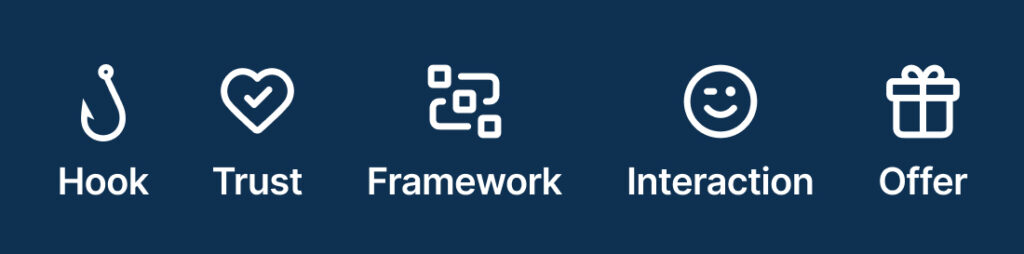
Step 1: Hook Your Audience in the First Few Minutes
The first five minutes determine whether your audience stays or leaves.
Start by clearly stating who the webinar is for. Speak directly to your target audience and their current struggle.
Then show them what they will walk away with.
A simple example:
“By the end of this session, you’ll know how to reduce chronic stress in under 10 minutes a day using a simple 3-step reset routine.”
This creates immediate relevance and keeps webinar attendees watching.
Step 2: Build Trust Before You Teach
Before you open your slide deck or PowerPoint, build connection.
Your audience members want to know that you understand their situation.
Share a short story that reflects where they are now and how you got results. Keep it focused and relevant.
This step turns your webinar from a presentation into a shared experience.
Step 3: Deliver Structured Webinar Content
This is where many webinars fall apart.
Instead of dumping information, organize your webinar content into a simple framework.
Three to five key points is enough. For example, instead of teaching everything you know, walk your audience through a simple 3-step framework they can understand and see themselves using.
Each section should build on the previous one and move the audience forward.
Your slide deck should support your message, not overwhelm it. Keep slides simple. Use visuals when possible. Avoid clutter.
When your message is clear, your audience stays with you.
Step 4: Use Interactive Features to Keep Your Webinar Audience Engaged
Engagement doesn’t happen by accident. You have to create it.
Use interactive features throughout your webinar:
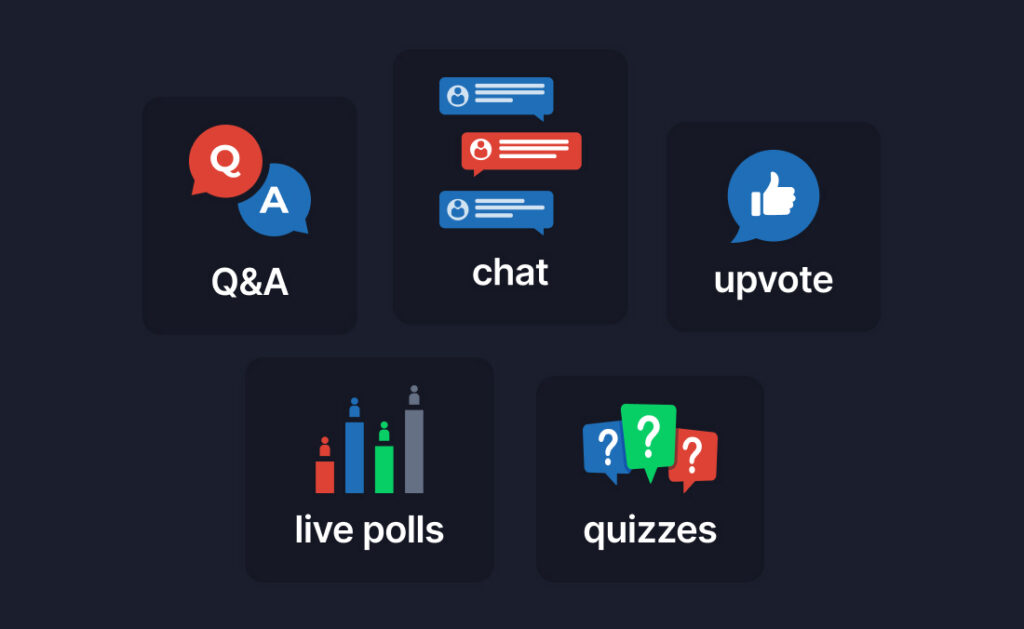
- Ask specific questions in the chat
- Run live polls to get quick feedback
- Use quizzes to reinforce key ideas
- Invite attendees to answer questions during the session
- Use Q&A sessions to address real concerns
Some webinar platforms allow upvote features so your audience can highlight the most relevant questions.
These small moments keep your audience involved and focused.
Step 5: Transition Naturally Into Your Offer
This is where many people lose momentum.
Instead of abruptly switching into a pitch, connect your teaching to your offer.
Show your audience the gap between understanding the strategy and actually implementing it on their own. That gap is where your offer becomes valuable.
Then present your solution as the next logical step.
A clear CTA should feel like a continuation of the webinar, not a separate sales message.
Struggling to turn your webinar into a clear, compelling offer?
This is where most webinars lose momentum.
The Offer Stack Builder inside WebinarJam Kit shows you exactly how to structure your offer so it feels like the natural next step, not a forced pitch.
Plus, you get the full system for building, delivering, and converting your webinars.
Webinar Engagement Strategies That Actually Work
Once your structure is in place, you can layer in simple strategies to improve webinar engagement.
These are simple strategies you can apply immediately to increase webinar engagement.
Use Polls, Quizzes, and Live Interaction
Live polls are one of the easiest ways to engage your audience.
They give you instant feedback and help your webinar attendees feel involved.
Quizzes can also reinforce key concepts and make your content more memorable.
For example, ask: ‘What’s your biggest challenge with webinars right now? Type it in the chat.’
This instantly pulls your audience into the conversation.
Plan Strategic Q&A Sessions
Q&A sessions are powerful because they create real dialogue.
Encourage your audience to ask questions throughout the webinar, not just at the end.
When you answer questions in real time, you build trust and show expertise.
It also helps you address objections before they become barriers.
Design Your Webinar Presentation for Attention
Your webinar presentation should be easy to follow.
If you are using PowerPoint or another slide tool, keep your slide deck clean and simple.
Use short phrases, not long paragraphs.
Each slide should support one idea.
This keeps your audience focused and reduces cognitive overload.
Keep Energy High With Real-Time Engagement
Energy is not just about how you speak. It is about how you involve your audience.
Call out responses in the chat. Acknowledge participation. Build momentum.
Even in virtual events, this creates a sense of connection.
When your audience feels seen, they stay engaged.
Common Mistakes That Kill Webinar Engagement
Even strong webinar content can fall flat if you make these mistakes.
Talking at Your Audience Instead of Engaging Them
If your webinar feels like a lecture, people will tune out.
An interactive webinar invites participation. It creates a two-way experience.
Overloading Slides With Too Much Information
Too much information leads to people getting overwhelmed.
When your slides are crowded, your audience stops listening.
Keep your webinar presentation simple and focused.
Ignoring Interaction Opportunities
If you are not using polls, Q&A sessions, or chat prompts, you are missing key engagement moments.
These features exist for a reason. Use them.
Weak or Missing CTA
If your audience doesn’t know what to do next, they won’t do anything.
A strong CTA connects directly to your webinar content and gives a clear next step.
How to Create a Seamless Webinar Experience From Start to Finish
Engagement is not limited to the live webinar.
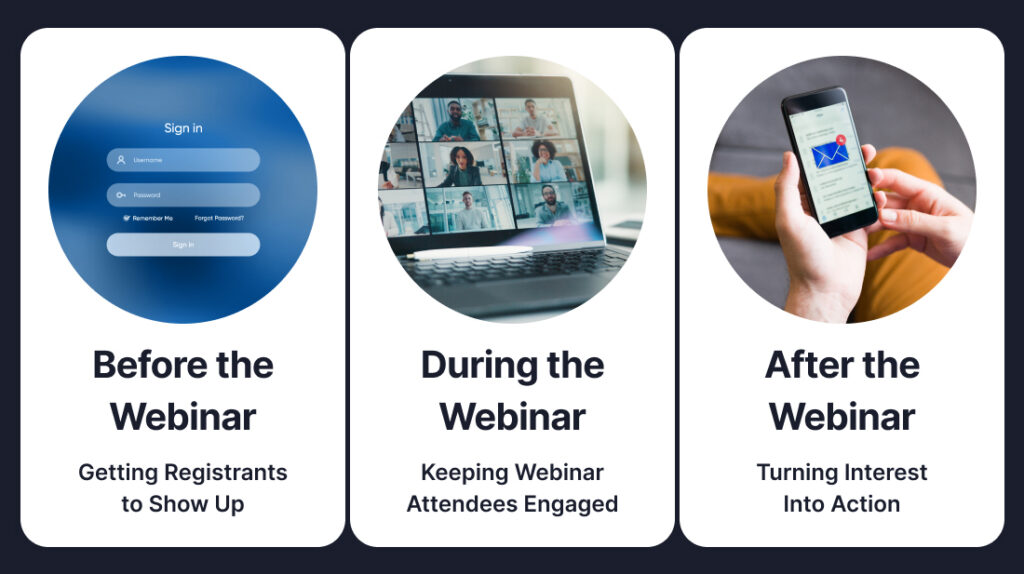
It starts before the event and continues after it ends.
Before the Webinar: Getting Registrants to Show Up
Your registrants need a reason to attend.
Use email marketing to send reminders and build anticipation.
You can also promote your webinar through social media platforms like LinkedIn to attract the right audience.
Clear messaging increases attendance and sets expectations.
During the Webinar: Keeping Webinar Attendees Engaged
This is where your structure and interactive features come into play.
Follow your webinar format. Ask questions. Use live polls.
Guide your webinar audience through a clear experience.
After the Webinar: Turning Interest Into Action
Your follow-up emails are critical.
Reinforce the key takeaways from the webinar.
Remind your audience of the value and the next step.
This is where many conversions happen.
Example of an Engaging Webinar Flow
Here’s a simple breakdown of how an engaging webinar might look:
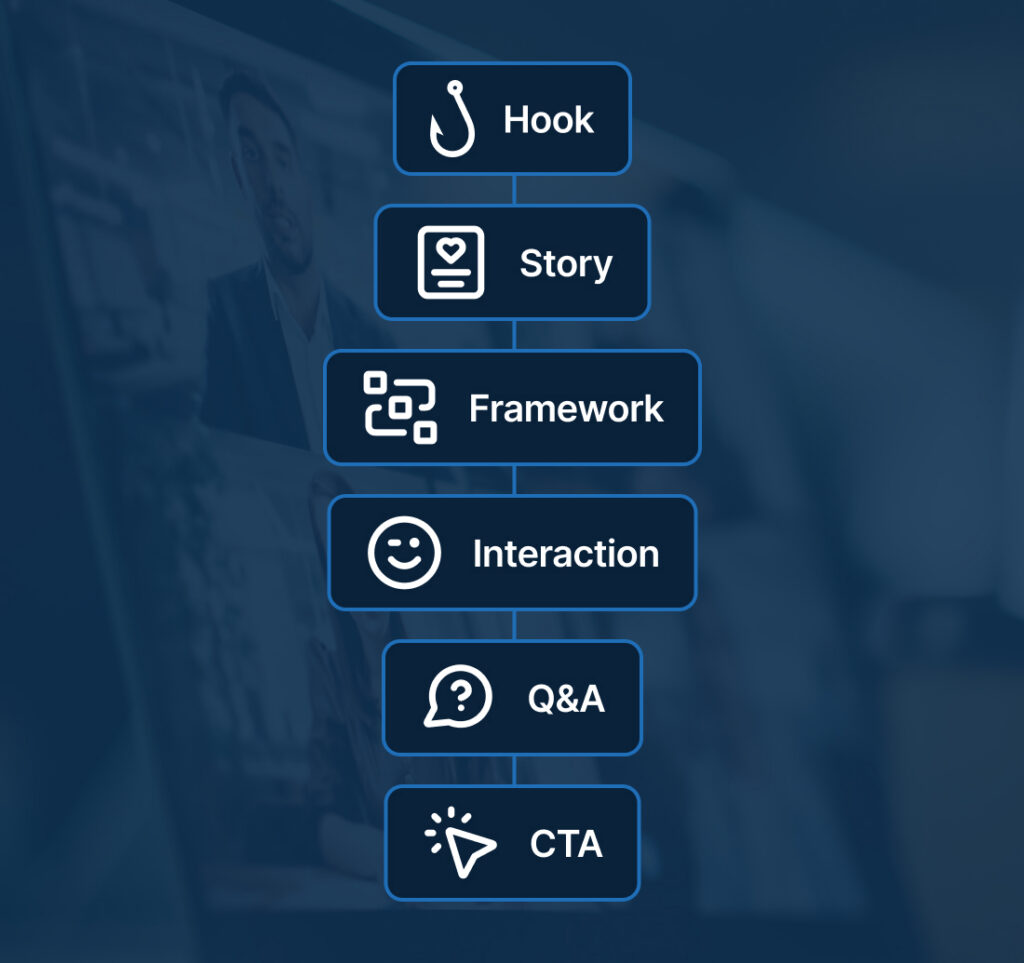
- Opening hook that speaks to a specific problem
- Short story that builds trust
- Clear framework with three main points
- Interactive moments using polls and questions
- Q&A session to address concerns
- Smooth transition into a clear CTA
This is the exact structure most high-converting webinars follow, whether live or on-demand.
Want a proven webinar structure you can plug into your business without second-guessing every step?
WebinarJam Kit includes done-for-you frameworks and templates you can plug directly into your webinar.
From structure to follow-up, it shows you how to turn this into a repeatable system.
Choosing the Right Webinar Platform and Tools
The wrong webinar platform can quietly kill engagement before your webinar even starts.
What to Look for in Webinar Software
A good webinar platform should make engagement easy, not something you have to force. Look for:
- Interactive features like polls and Q&A
- Reliable performance for live webinars
- Options for on-demand sessions
- Easy integration with your existing systems
These features make it easier to deliver a smooth webinar experience.
Tools That Improve Webinar Engagement
Your webinar software is just one part of the system.
You may also use:
- PowerPoint or similar tools for your slide deck
- Email marketing platforms for reminders and follow-up
- Systems that support your sales team and lead generation process
The goal is to create a simple, connected workflow.
How to Improve Future Webinars Based on Engagement Data
Every webinar gives you data you can use to improve.
Track Engagement Metrics
Look at:
- Where attendees drop off (ex: 20-minute mark)
- Which polls get the most responses
- Which questions come up repeatedly
These insights show you where engagement is strong and where it drops.
Use Feedback and Brainstorming to Improve
Review the questions your audience asks.
These often reveal gaps in your webinar content.
Use this feedback to refine your approach for future webinars.
Optimize for Better Conversions
Small changes can make a big difference.
Adjust your webinar format. Improve your CTA. Simplify your message.
Over time, this leads to stronger lead generation and better results.
How to Create an Engaging Webinar Without Overcomplicating It
It’s easy to feel overwhelmed when you look at everything involved in running webinars.
But you don’t need complexity.
You need clarity.
A simple webinar format, a clear message, and a few interactive features are enough to create an engaging webinar.
Focus on what matters:
- Clear structure
- Relevant content
- Consistent interaction
That’s what keeps your audience engaged.
Final Thoughts: Engagement Is a System, Not a Talent
You don’t need to be a natural presenter to create a successful webinar.
You don’t need to be more charismatic or more ‘salesy.’
You need a system that does the heavy lifting for you.
When your webinar is structured, interactive, and focused on outcomes, engagement becomes predictable.
And when engagement improves, conversions follow.
That’s how webinars turn into a reliable part of your marketing strategy and a consistent source of clients.
If your webinars aren’t converting right now, more tactics won’t fix it. You need a system.
WebinarJam Kit gives you exactly that:
- The Show-Up System to get more registrants to attend
- The Follow-Up Engine to turn interest into action
- The Offer Stack Builder to convert without pressure
- Plus registration page copy blocks to get started faster
Everything you need to stop guessing and start running webinars that consistently turn viewers into clients.