


You can have a great webinar topic, a polished presentation, and valuable insights to share.
But if nobody registers or attends, none of it matters.
That’s the frustrating part about webinar promotion. Many coaches, consultants, and experts assume the webinar itself is the hard part. In reality, promotion is what determines whether your webinar becomes a lead generation engine or another exhausting project that goes nowhere.
The good news is that successful webinar marketing usually isn’t about being louder or posting constantly on social media.
It’s about building a simple webinar strategy that consistently gets the right people to register, attend, and take action.
In this guide, you’ll learn how to promote a webinar in a way that feels practical, manageable, and effective, even if you’re not an advanced marketer.
What Most People Get Wrong About Webinar Promotion
Most webinars don’t fail because the content is bad.
They fail because the promotion is inconsistent.
A lot of experts quietly assume that if the webinar topic is valuable enough, people will naturally show up. Then they post a few times on LinkedIn, send one email, and wonder why registrations stay low.
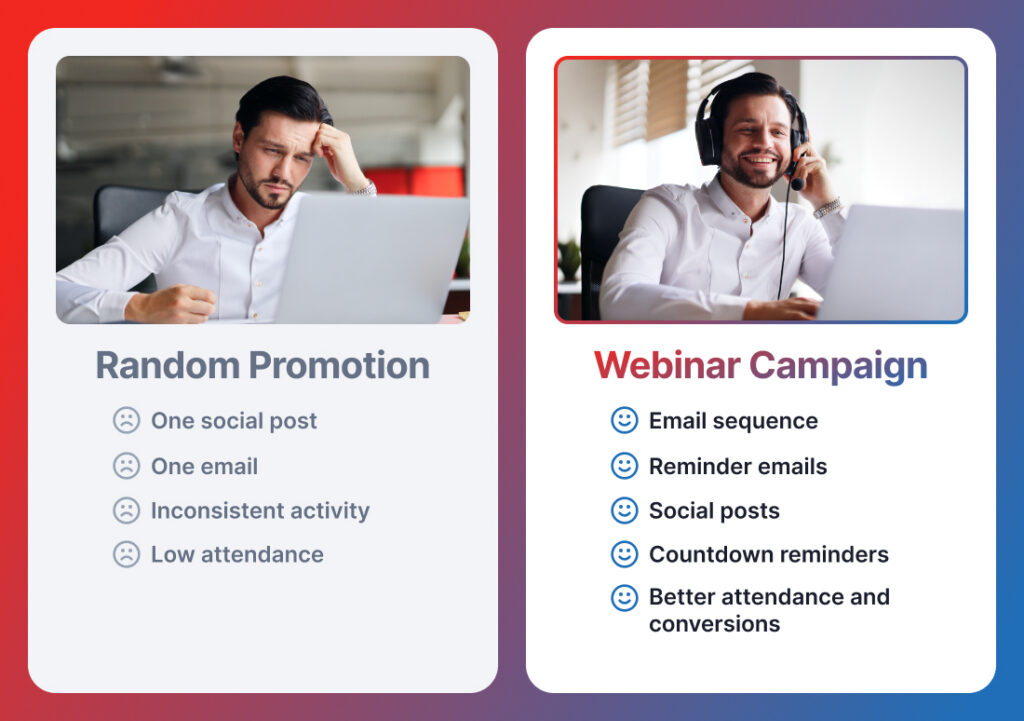
Successful webinar promotion works differently.
It functions more like a campaign than a one-time announcement.
They Start Promoting Too Late
One of the biggest webinar marketing mistakes is waiting until the last minute to start promoting.
If your webinar is next Thursday and you begin talking about it on Monday, you’re already behind.
People are busy. Your audience may need multiple reminders before they register. They may see your webinar landing page once, get distracted, and come back later.
A simple webinar campaign timeline often looks like this:
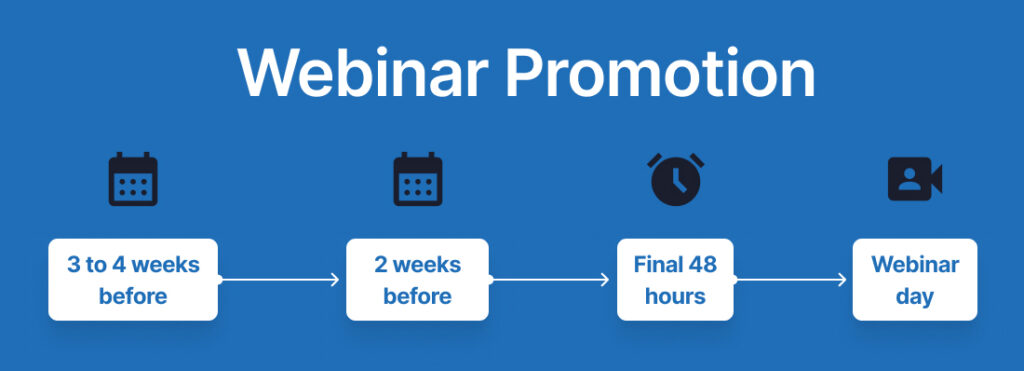
- 3 to 4 weeks before: announce the webinar
- 2 weeks before: share educational content tied to the webinar topic
- 1 week before: increase email and social media promotion
- Final 48 hours: urgency and reminder emails
- Day of webinar: final reminders and attendance prompts
Consistent exposure builds trust and improves webinar registration rates over time.
They Rely on One Channel
Another common issue is relying entirely on one traffic source.
For example, some business owners depend only on social media. Others only email their list.
The strongest webinar promotion strategies combine multiple channels:
- Email marketing
- LinkedIn posts
- Facebook groups
- YouTube content
- Podcast mentions
- Referral partners
- Reminder emails
- Retargeting ads
You don’t need to be everywhere.
But you do need enough touchpoints for your target audience to notice and remember your webinar.
They Focus Only on Registrations Instead of Attendance
Getting webinar registrations is important.
But registrations alone don’t drive sales.
Attendance rate matters just as much.
If 500 people register but only 40 attend the live webinar, your conversion opportunities shrink dramatically.
That’s why strong webinar funnels focus heavily on reminders, engagement, and reducing friction before the event starts.
A good webinar platform can help automate this process so people don’t forget to show up.
Start With a Webinar Topic People Actually Want
Before you worry about promotion tactics, make sure your webinar topic is compelling enough to attract attention.
Even the best webinar marketing won’t save a weak topic.
Your audience needs to instantly understand:
- what they’ll learn
- why it matters
- what outcome they’ll get
Clarity always beats cleverness.
Focus on a Specific Transformation
The best webinar titles promise a clear result.
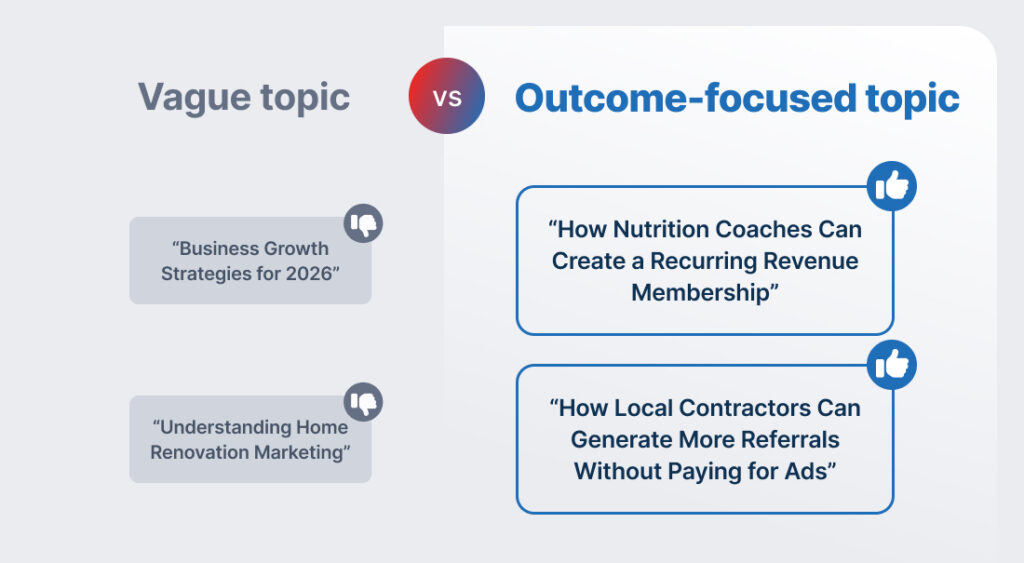
Compare these examples:
Weak:
- “Business Growth Strategies for 2026”
Stronger:
- “How Nutrition Coaches Can Create a Recurring Revenue Membership”
Weak:
- “Understanding Home Renovation Marketing”
Stronger:
- “How Local Contractors Can Generate More Referrals Without Paying for Ads”
Specific webinar topics usually create stronger conversion rates because they speak directly to a real problem.
Solve One Expensive or Emotional Problem
Strong webinar content often addresses:
- saving time
- increasing revenue
- reducing overwhelm
- simplifying systems
- improving efficiency
- generating leads
For example, a financial consultant might host a webinar on:
“How Small Business Owners Can Improve Cash Flow Without Raising Prices”
A fitness studio owner might teach:
“How Boutique Gyms Can Improve Member Retention During Slow Seasons”
These webinar topics feel immediately useful because they solve meaningful business problems.
Use Your Audience’s Exact Language
One of the easiest ways to improve webinar registration rates is to use the same language your audience already uses.
Look through:
- customer emails
- consultation calls
- online reviews
- surveys
- comments on social media
Pay attention to repeated phrases and frustrations.
If your audience says:
“I’m overwhelmed trying to manage everything manually”
Use language like:
“How to Automate Client Follow-Up Without Adding More Complexity”
Simple wording often outperforms industry jargon.
Build a Simple Webinar Promotion Plan
A webinar campaign becomes much easier when you stop improvising every time.
You don’t need a complicated marketing system.
You just need a repeatable framework.
Create a Promotion Timeline
Breaking webinar promotion into stages keeps the process manageable.
Here’s a simple structure:
Weeks 3 to 4 Before
- Publish webinar landing page
- Send announcement email
- Begin social media promotion
- Reach out to partners or affiliates
Weeks 1 to 2 Before
- Share educational content related to the webinar topic
- Post short videos or case studies
- Send reminder emails
- Encourage early registration
Final 48 Hours
- Increase urgency
- Highlight live bonuses
- Share countdown posts
- Send reminder emails
Day Of Webinar
- Send final attendance reminders
- Post on social media
- Encourage attendees to join early
A structured webinar strategy prevents last-minute panic.
Decide Which Channels to Use
You do not need to master every platform.
Most coaches and consultants only need two or three strong traffic sources.
Start with:
- email marketing
- Facebook groups
- YouTube
- podcast audiences
- referral partnerships
Choose channels where your target audience already spends time.
For example, executive coaches may perform well on LinkedIn.
Creative business owners may see better engagement on Instagram or YouTube.
Match the Message to the Platform
Different channels require different messaging styles.
Email marketing works well for:
- deeper storytelling
- FAQs
- objections
- detailed webinar benefits
Social media works better for:
- curiosity
- quick tips
- short educational content
- urgency
For example:
LinkedIn hook:
“Most service businesses don’t need more leads. They need a better follow-up system.”
Instagram caption:
“Three reasons clients stop responding after consultations and how to fix it.”
Email teaser:
“This small scheduling mistake is quietly costing consultants thousands every year.”
The message should fit the platform.
Use Email Marketing as Your Primary Promotion Channel
Social media visibility changes constantly.
Email marketing gives you direct access to your audience.
For most webinar funnels, email remains the highest-converting traffic source.
It’s also one of the best ways to improve webinar attendance.
Send More Emails Than You Think You Need
Many business owners under-promote because they worry about annoying people.
In reality, most subscribers never see every email you send.
A healthy webinar email sequence often includes:
- announcement email
- reminder emails
- FAQ emails
- urgency emails
- day-of reminders
- replay emails
Repetition improves webinar registrations.
Recommended Webinar Email Sequence
A simple webinar email sequence could look like this:
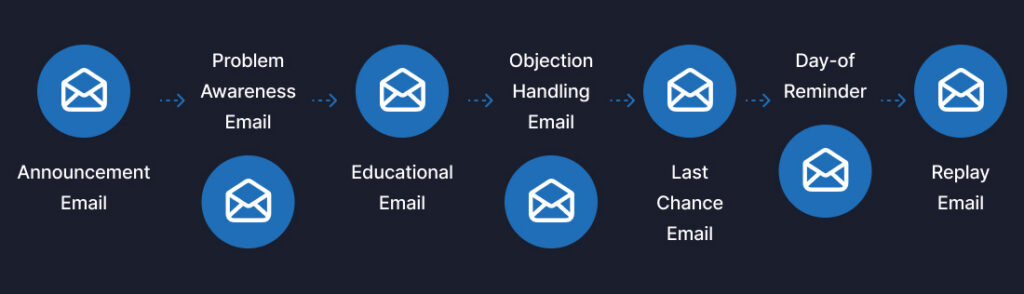
Email 1: Announcement
Introduce the webinar topic and outcome.
Email 2: Problem Awareness
Highlight the cost of ignoring the problem.
Email 3: Educational Value
Teach a quick insight tied to the webinar content.
Email 4: Objection Handling
Address concerns like:
- “I’m too busy”
- “Will this apply to me?”
- “Do I need advanced experience?”
Email 5: Last Chance
Create urgency before registration closes.
Email 6: Day-Of Reminder
Encourage live attendance.
A webinar platform with built-in reminder emails can make this much easier to manage.
Write Emails That Focus on the Outcome
Avoid filling webinar emails with too many details.
Instead, focus on the transformation.
For example:
Weak:
“Join our webinar about operational systems.”
Stronger:
“Learn how interior designers can reduce project delays without hiring more staff.”
People register because they want a result.
Not because they want another webinar.
Promote Your Webinar on Social Media Without Burning Out
Many experts assume webinar promotion requires posting constantly.
It doesn’t.
You can create strong audience engagement with a relatively small amount of focused content.
Repurpose One Core Message Into Multiple Posts
One webinar topic can become:
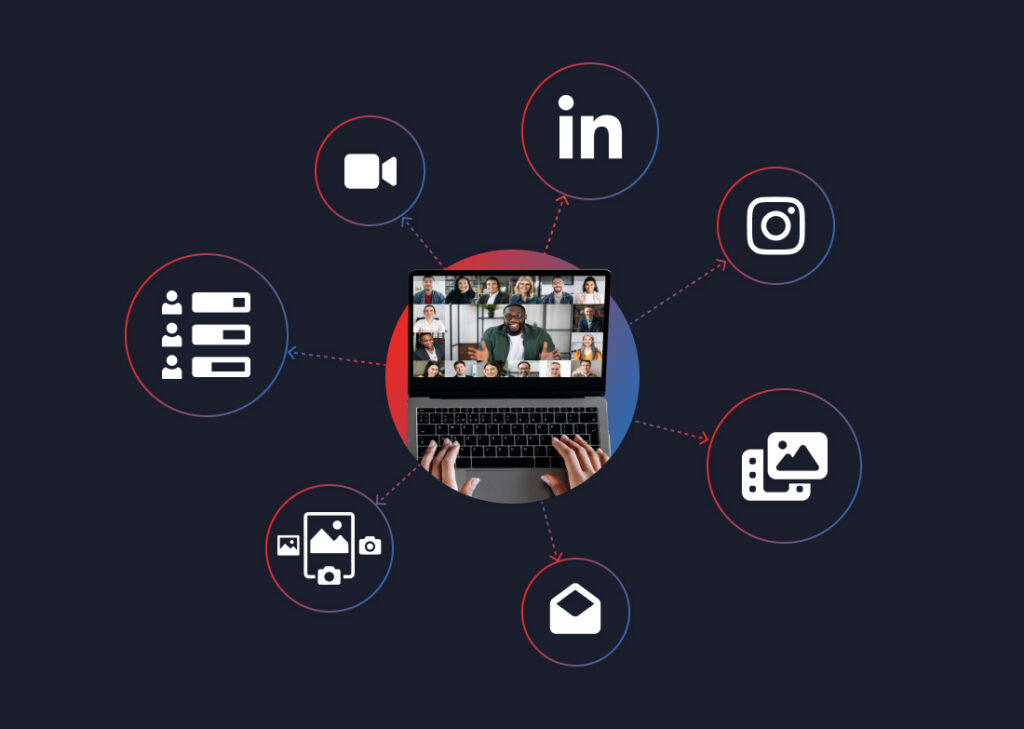
- short videos
- carousel posts
- email content
- polls
- LinkedIn posts
- stories
- reels
For example, a webinar about improving restaurant profitability could become:
- “3 mistakes hurting restaurant margins”
- “Why more reservations don’t always increase profit”
- “One staffing change that improves efficiency”
You don’t need endless new ideas.
You need consistent repetition around the same core message.
Use Educational Content Instead of Constant Promotion
People engage more with useful insights than nonstop invitations.
Instead of repeatedly saying:
“Register for my webinar”
Teach small lessons connected to the webinar topic.
For example:
- share one common mistake
- explain one useful framework
- offer one quick win
Educational content builds trust before the webinar even begins.
Create Urgency as the Webinar Gets Closer
As the live webinar approaches, shift your messaging toward urgency.
Examples:
- “Registration closes tonight”
- “Live Q&A included”
- “Final reminder before we go live”
- “Replay available for 48 hours only”
Deadlines improve webinar conversion rates because they encourage action.
Increase Webinar Attendance Rates With Better Reminders
One of the fastest ways to improve webinar results is to increase attendance.
Small improvements in attendance rate can significantly impact sales and audience engagement.
Send Automated Reminder Emails and Texts
Most attendees need multiple reminders before the webinar starts.
A simple reminder schedule includes:
- 1 week before
- 24 hours before
- 1 hour before
- 15 minutes before
Automated webinar reminders reduce no-shows and help people join on time.
This is especially important for busy professionals juggling meetings, clients, and family responsibilities.
Make Attending Feel Easy
Complex webinar access lowers attendance.
Keep the process simple:
- one-click access links
- mobile-friendly webinar platform
- calendar invites
- clear instructions
- visible start times
The easier the experience feels, the more likely people are to attend.
Give People a Reason to Show Up Live
Live webinars should feel more valuable than watching the replay later.
You can encourage attendance by offering:
- live Q&A
- downloadable templates
- worksheets
- bonus resources
- limited-time offers
For example, a real estate consultant could offer:
“A property evaluation checklist only available during the live session.”
Simple incentives improve webinar attendees’ motivation to show up live.
Use Partnerships and Affiliates to Reach More People
You do not always need a massive audience to run successful webinars.
Strategic partnerships can dramatically expand your reach.
Partner With Complementary Experts
The best webinar partnerships happen when audiences overlap naturally.
Examples:
- financial advisors + accountants
- fitness coaches + nutritionists
- business consultants + HR firms
- photographers + creative agencies
The goal is alignment, not size.
A smaller but highly relevant audience usually performs better than broad exposure.
Make Promotion Easy for Partners
Most people are more likely to promote your webinar when you reduce friction.
Provide:
- swipe copy
- email templates
- social media captions
- webinar graphics
- direct registration links
The easier you make promotion, the more likely affiliates and partners will participate consistently.
Incentivize Affiliates or Referrals
Simple referral incentives can improve webinar registrations significantly.
Examples include:
- affiliate commissions
- lead swaps
- bonus resources
- reciprocal promotions
You don’t need a massive affiliate program.
You just need aligned incentives.
Run Paid Ads Only After Your Messaging Works Organically
Paid ads can help scale webinar promotion.
But they should not be your starting point.
Validate Your Webinar Topic First
Before investing in paid ads, confirm that your webinar topic already generates:
- clicks
- comments
- registrations
- audience engagement
Organic traction usually signals stronger messaging.
If nobody responds organically, ads typically amplify the same problem.
Keep Webinar Ads Simple
The best webinar ads are usually straightforward.
Focus on:
- the problem
- the outcome
- the CTA
For example:
“How Salon Owners Can Reduce Last-Minute Cancellations Without Hiring More Staff”
Simple messaging often creates stronger webinar conversion rates than overly clever copy.
Retarget People Who Visited the Registration Page
Not everyone registers the first time they visit your webinar landing page.
Retargeting ads help remind interested visitors to come back.
Even a small retargeting campaign can improve webinar registrations because these audiences are already familiar with your offer.
Follow Up After the Webinar to Drive More Sales
The webinar itself is not the end of the funnel.
It’s often the beginning of the sales conversation.
Send the Replay Quickly
Send the webinar replay within 24 hours.
This keeps momentum high while the content is still fresh.
Replay emails work especially well when combined with:
- limited-time bonuses
- expiration dates
- additional resources
- next-step CTAs
Many webinar sales happen during replay campaigns.
Continue the Conversation
Strong follow-up email sequences answer lingering questions and objections.
Topics to address include:
- implementation concerns
- pricing concerns
- time concerns
- success stories
- customer examples
This is where trust deepens.
It’s also where many hesitant buyers finally decide to move forward.
Analyze What Worked Before the Next Webinar
Every webinar campaign creates useful data.
Review:
- webinar registration rate
- attendance rate
- replay views
- audience engagement
- conversion rate
- traffic sources
Small improvements compound over time.
You do not need a perfect webinar funnel immediately.
You need a process you can improve consistently.
A Simple Webinar Promotion Strategy You Can Repeat Every Time
The best webinar strategy is usually the one you can repeat consistently.
You do not need:
- endless content
- advanced automation
- complicated funnels
- huge ad budgets
You need:
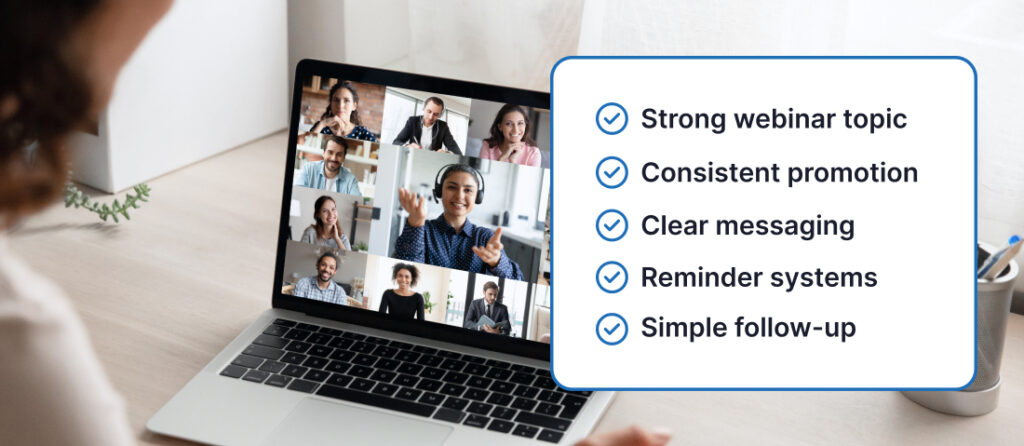
- a strong webinar topic
- consistent promotion
- clear messaging
- reminder systems
- simple follow-up
That’s what turns webinars into a scalable lead generation system instead of another stressful marketing task.
And once those systems are in place, webinars stop feeling overwhelming.
They start creating leverage.
You stop chasing every lead manually.
You start building a business that works more consistently, with less chaos behind the scenes.
If you’re ready to simplify webinar promotion, improve attendance, and build automated webinar funnels that actually convert, WebinarJam can help.
It gives you the tools to manage registrations, reminder emails, audience engagement, webinar replays, and live presentations in one place so you can focus on teaching, serving, and growing your business with more clarity and less overwhelm.